
A strong online presence helps businesses build trust and reach customers.
If you are wondering how to improve online presence the process does not have to begin with complicated tools or expensive campaigns. A strong foundation comes from understanding your audience, improving the places where your business appears online, and consistently providing useful information.
Understand Your Target Audience
The first step is to understand who you want to reach. Your online presence should be created for real people, not only for search engines.
Identify your ideal customers by considering their age, location, interests, needs, problems, and buying behavior. Think about the questions they ask before making a purchase. Also consider what information could help them compare options or understand your product.
This research can influence your website content, social media posts, visuals, offers, and communication style. When your content answers real customer questions, your business becomes more useful and easier to remember.
Create a Professional Website
Your website is often one of the first places people visit after discovering a business. It should clearly explain what you offer, who you serve, and how visitors can contact you.
Keep the navigation simple and make important pages easy to find. Include a clear homepage, relevant service or product pages, an About page, contact information, and useful content where appropriate.
Use clear headlines and calls to action. Tell visitors what they can do next, such as contacting you, requesting information, booking an appointment, or exploring a product.
Improve Your Search Visibility
Search engines can help people discover your business when they are actively looking for information. Improving search visibility starts with understanding what your audience searches for.
Choose relevant keywords for your pages and use them naturally in titles, headings, descriptions, and useful content. Avoid filling pages with repeated keywords because readability should remain a priority.
Create content that answers specific questions and provides genuine value. Search visibility can improve over time when a website consistently offers helpful, relevant, and well-organized information.
Local businesses should also pay attention to local search. Keep business details such as your name, address, phone number, opening hours, and website information accurate wherever they appear online.
Build a Consistent Social Media Presence
Social media can help businesses communicate with audiences and show the personality behind their brand. You do not necessarily need to be active on every platform.
Choose platforms that match your audience and business goals. Then create a realistic posting schedule that you can maintain consistently.
Share a mix of educational, informative, promotional, and engaging content. For example, you could publish tips, tutorials, product demonstrations, customer questions, behind-the-scenes content, or industry insights.
Use consistent colors, fonts, imagery, and tone so people can recognize your brand across different platforms. Respond to comments and messages professionally, because interaction can help build stronger relationships with your audience.
Create Valuable Content
Content gives people a reason to visit your website and follow your brand. It can also demonstrate knowledge and answer questions before someone contacts your business.
Start with topics that your customers genuinely care about. Blog posts, guides, frequently asked questions, videos, infographics, and short social posts can all support your content strategy.
Avoid creating content simply to publish something. Each piece should have a clear purpose. It might educate the audience, answer a question, solve a problem, introduce a product, or help someone make a decision.
Use simple language and organize longer content with headings, short paragraphs, examples, and lists. Helpful content is easier to read and more likely to keep visitors engaged.
Maintain Consistent Branding
A recognizable brand makes your online presence feel more professional and connected. Your website, social profiles, advertisements, emails, and other digital materials should communicate a similar identity.
For example, if your brand uses a clean and modern visual style, suddenly using unrelated colors and styles across different platforms can create confusion.
Use Reviews and Social Proof Carefully
Reviews can influence how potential customers perceive a business. Encourage genuine customers to share honest feedback when appropriate.
Display reviews in relevant places, such as your website or business profile, without changing their meaning or creating misleading claims.
If you receive negative feedback, respond professionally and try to understand the issue. Avoid arguing publicly. A thoughtful response can show that your business takes customer concerns seriously.
Track Your Results
Improving your online presence is an ongoing process. You need to understand what is working and what needs improvement.
Track useful measurements such as website traffic, search impressions, engagement, inquiries, conversions, and content performance. The right metrics depend on your business goals.
For example, a local service business may care more about phone calls and inquiries than total page views. An online store may focus more on product visits, purchases, and conversion rates.
Use analytics tools to identify patterns. If a particular topic consistently attracts visitors, you may create more useful content around that subject.
Keep Information Updated
Outdated information can damage trust. Review your website and social profiles regularly to make sure important details are accurate.
Check contact information, prices, services, opening hours, links, team information, and promotional offers. Remove outdated announcements and update older articles when necessary.
Refreshing useful content can also make information more relevant for visitors. When updating an article, improve unclear sections, add current examples, fix broken links, and remove information that is no longer accurate.
Focus on Long-Term Consistency
There is no single shortcut for building a strong online presence . Results usually come from several activities working together over time.
This is why consistency matters. Set realistic goals, create a manageable schedule, review performance, and improve your approach based on what you learn.
Final Checklist
Before considering your online presence complete, review a few essentials. Is your website easy to use? Can visitors quickly understand what you offer? Are your contact details accurate? Is your branding consistent? Are your social profiles active and relevant? Does your content answer customer questions? Are you monitoring meaningful results?
If several answers are no, start with the most important issue rather than trying to change everything at once.
Conclusion
Learning how to improve online presence is less about being everywhere and more about being useful, consistent, and easy to find. A professional website, relevant content, search visibility, social media activity, consistent branding, genuine reviews, and regular measurement can work together to create a stronger digital footprint.
Start by understanding your audience and identifying the areas that need improvement. Then make gradual changes, measure the results, and keep refining your approach. With patience and consistency, your online presence can become a valuable part of your overall business growth.
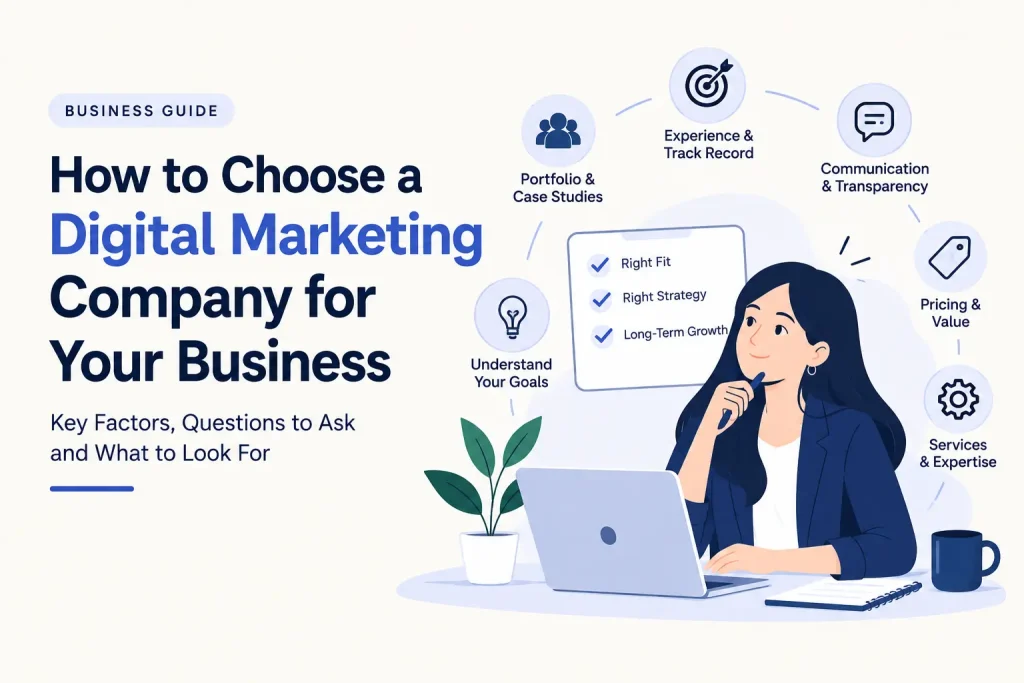
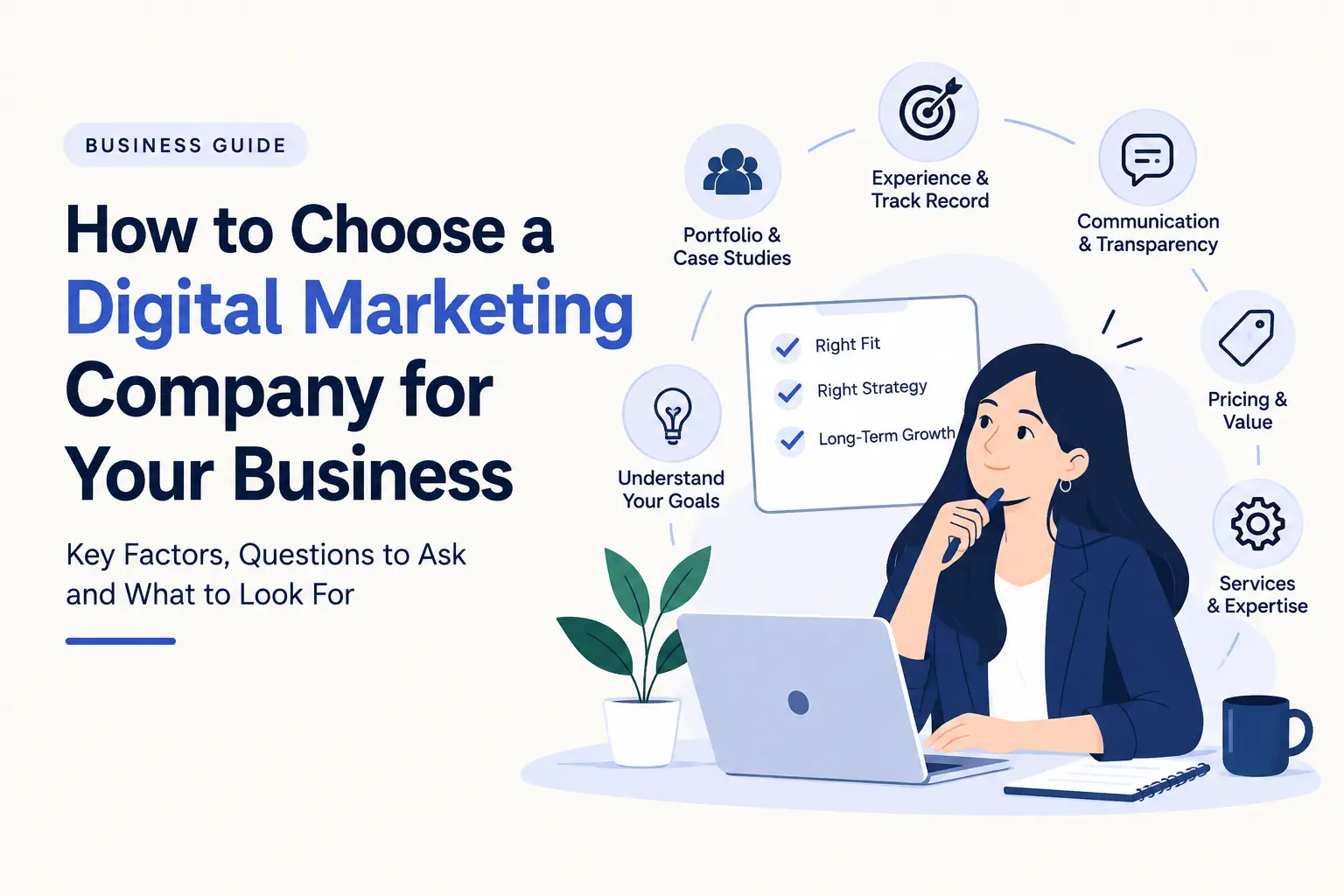
A digital marketing company should understand your business, audience, competition, goals, and budget before recommending a strategy. The partner should explain its work, communicate consistently, and measure results.
This guide explains what to check before choosing a marketing partner and how to compare providers confidently.
1. Understand Your Business Goals First
Before contacting a digital marketing company, decide what you want to achieve. Your goal could be increasing website traffic, generating leads, improving local visibility, increasing online sales, building brand awareness, or strengthening customer retention.
Different goals require different strategies. A business that needs local enquiries may need local SEO and conversion-focused website improvements. An ecommerce store may need product optimization, paid advertising, email marketing, and conversion tracking.
Clear goals make it easier to evaluate whether a provider understands your requirements.
Define Your Target Audience
Knowing your audience is as important as knowing your goals. Think about who buys your products or services, what problems they have, what they search for, and which platforms they use.
A digital marketing company should ask about your customers instead of immediately presenting a standard package.
For example, a local fitness studio and a software company should not receive the same marketing strategy. Their audiences, buying journeys, content requirements, and conversion points are different.
2. Check the Services They Actually Provide
Marketing covers many activities. Before signing an agreement, check whether the provider offers the services your business needs.
Common services include search engine optimization, social media marketing, content marketing, paid advertising, email marketing, website development, conversion optimization, analytics, and lead generation.
A digital marketing company does not need to offer every service. What matters is whether its expertise matches your objectives.
Look Beyond a Service List
A digital marketing company with many services does not automatically indicate expertise. Ask how each service will support your business goal.
For example, if SEO is recommended, ask which areas will be addressed. These might include technical SEO, on-page optimization, content, internal linking, local SEO, or website performance.
If social media is recommended, ask what type of content will be created, which platforms will be used, and how performance will be measured.
3. Review Their Experience Carefully
Experience can be useful, but it should be examined rather than accepted at face value.
Look at the provider’s website, case studies, previous projects, client industries, testimonials, and published content. Try to understand what work was actually completed and what results were achieved.
A digital marketing company working with businesses similar to yours may already understand some industry-specific challenges. However, relevant experience is not the only factor. A provider should still demonstrate that it can adapt its strategy to your individual situation.
Ask for Real Examples
When reviewing case studies, look for specifics.
A useful case study may explain the original problem, strategy, work completed, measurement methods, and outcome. Be cautious when a case study contains only vague claims such as “massive growth” without supporting context.
Ask whether results came from organic marketing, paid campaigns, website changes, or a combination.
4. Understand Their SEO Approach
If SEO is part of your strategy, ask how the provider approaches it.
A responsible SEO provider should focus on useful content, technical health, search intent, website structure, relevant keywords, internal linking, and a good user experience.
Be careful with anyone guaranteeing a specific Google ranking within a very short period. Search performance depends on competition, website history, content quality, authority, technical factors, and many other variables.
A digital marketing company should explain what it can control and what remains uncertain.
Ask About Reporting
Good reporting should help you understand results and next steps.
Ask whether you will receive regular reports and which metrics will be included. Depending on your goals, these may include organic traffic, keyword visibility, enquiries, conversions, leads, sales, or advertising performance.
A report filled with numbers is not necessarily useful. The important question is whether those numbers help you make better decisions.
5. Evaluate Communication and Transparency
Communication matters.
Before starting, find out who will manage your account, how often updates arrive, how meetings work, and how questions are answered.
A digital marketing company should be able to explain complicated marketing concepts in language that you can understand.
Transparency matters when discussing budgets. Make sure you understand service fees, advertising budgets, software costs, content costs, website expenses, and any additional charges.
Check Account Ownership
Make sure your business retains appropriate access to important assets.
These can include your website, domain, hosting, Analytics, Search Console, advertising accounts, social accounts, creative files, and business listings.
Know who owns these accounts and how access will be handled.
6. Compare Pricing Carefully
Price matters, but it is not the only deciding factor.
Very cheap services may provide limited work, while expensive services are not automatically better. Compare what is included, who will perform the work, how much strategy is provided, and how results will be measured.
Ask for a clear proposal that explains deliverables, timelines, responsibilities, fees, and expected reporting.
Avoid Unrealistic Promises
Be cautious about promises such as guaranteed sales, instant rankings, thousands of followers, or overnight growth.
Marketing depends on many factors outside a provider’s control. A digital marketing company should discuss realistic expectations rather than guaranteeing outcomes it cannot control.
7. Choose Based on Fit
The best marketing partner for one business may not be the right partner for another.
Consider the provider’s communication style, expertise, process, team structure, experience, budget, and understanding of your goals.
You should feel comfortable asking questions and discussing problems. Marketing works better when both sides share information and cooperate.
A digital marketing company should be willing to explain why it recommends a particular channel instead of simply selling the largest package.
Final Checklist
Before deciding, ask yourself:
Does the provider understand my business?
Are the recommended services connected to my goals?
Can the team explain its strategy clearly?
Are reporting and communication expectations clear?
Do I understand the pricing and deliverables?
Will I retain access to important accounts?
Are the promises realistic?
Does the working relationship feel transparent and professional?
If the answer to these questions is yes, you have a stronger foundation for choosing a digital marketing company.
Conclusion
Choosing a marketing partner is an important decision. Instead of focusing only on rankings, follower counts, prices, or impressive promises, look at the complete picture.
A reliable digital marketing company should understand your goals, identify the right audience, recommend relevant channels, explain its strategy, measure meaningful results, and communicate openly.
Take time to compare providers, ask detailed questions, review their previous work, and understand exactly what you are paying for. Most importantly, choose a partner that treats your business as an individual project rather than applying the same strategy to every client.
A thoughtful selection process can help you build a marketing relationship based on clear expectations, useful work, transparency, and continuous improvement.
Improve your online presence by creating valuable content, optimizing your website, improving user experience, and maintaining consistent branding. Follow Google Search Central for reliable SEO guidance, best practices, and practical recommendations to help your website perform better in search results.